

Why Nearest Pickup, Cutoff Times, and Blackout Days Build Reliable Local Delivery
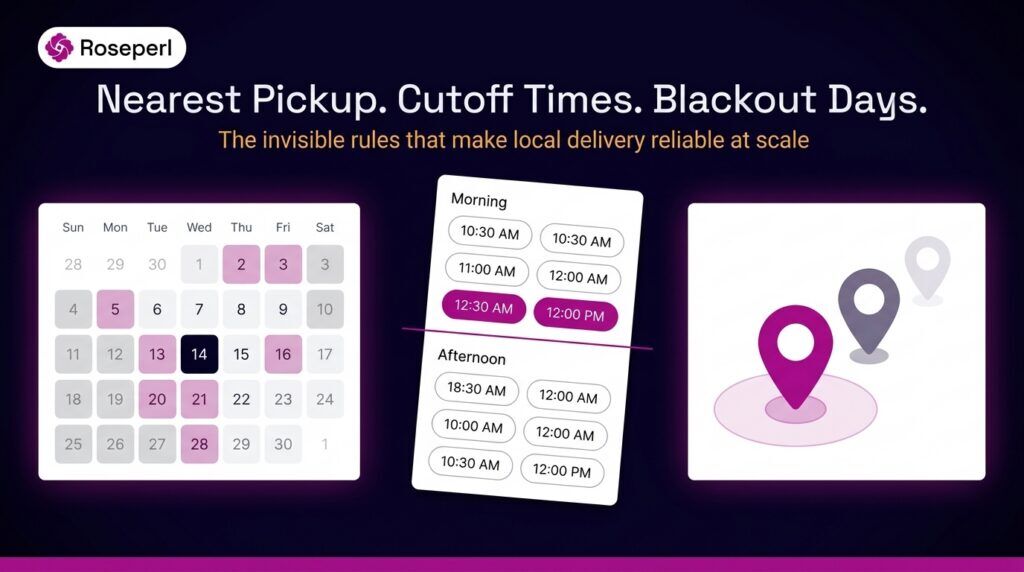
Local delivery reliability often breaks down long before a package leaves the store. You’ve felt the frustration: orders sent to the wrong pickup point, cutoff times missed, or deliveries scheduled on blackout days. The real fix starts with exact rules—nearest pickup logic, delivery cutoff times, and blackout days—that stop these problems before they happen. This post reveals why precise fulfillment controls are the backbone of dependable local delivery.
Nearest Pickup Logic
Local delivery begins with getting the basics right. It’s about ensuring your customers receive their orders from the nearest possible location.
Understanding Geofenced Delivery Zones
Geofencing delivery zones is like drawing a boundary around your service areas. This ensures orders only go to places you can actually reach. When customers input their address, your system checks if it’s within a designated area. If it is, great! Orders can proceed without a hitch. If not, customers are informed immediately, avoiding any late-stage surprises. This approach not only streamlines operations but also keeps expectations clear for your customers.
Leveraging Multi-Location Inventory
Having inventory spread across multiple locations? That’s a game-changer. It allows for flexibility in fulfilling orders. If one store is out of stock, another nearby location can step in. This multi-location strategy minimizes delays and keeps your customers happy. It also means you can serve a wider area without needing to overstock every location. In practice, this method reduces the distance packages travel, which saves time and resources.
Delivery Cutoff Times
Precise timing can make or break your delivery promise. It ensures your operations run smoothly and your customers aren’t left waiting.
Benefits of Precise Timing Rules
Precise timing rules prevent the chaos of last-minute orders. By setting a cutoff time, you decide when an order can be fulfilled the same day or needs to be scheduled for the next. This clarity enhances service reliability. Customers know exactly when their order will arrive, which boosts confidence and satisfaction. It’s like telling your customers, “We’ve got you covered.”
Managing Last-Mile Logistics
Effective last-mile logistics hinge on timing. When you know the exact cutoff for each day, you can plan resources better. Delivery drivers have clear schedules, and inventory management becomes more predictable. This structured approach helps avoid rushed deliveries and reduces the risk of errors. It’s a win-win: customers get their orders on time, and your operations remain efficient and stress-free.
Blackout Days in eCommerce

Setting clear boundaries on when orders cannot be fulfilled is crucial for maintaining trust.
Setting Holiday Blackout Dates
Certain days, like holidays, might be non-operational. Setting blackout dates ensures orders aren’t accepted when fulfillment is impossible. This way, customers don’t place orders expecting delivery when none is feasible. Clear communication about these dates avoids disappointment and maintains customer trust. It’s all about managing expectations upfront.
Controlling Order Routing Rules
Order routing rules are your control panel for fulfillment. These rules determine how orders are processed based on various factors, such as location and inventory levels. By adjusting these settings, you ensure orders are consistently directed to the right place, at the right time. This proactive management reduces misrouting and enhances delivery reliability.
Frequently Asked Questions
How does geofencing improve local delivery?
Geofencing improves local delivery by defining specific service areas. This ensures that only orders from reachable locations are accepted, preventing delivery delays and enhancing customer satisfaction.
Why are delivery cutoff times important?
Delivery cutoff times are crucial as they set clear boundaries for when orders can be processed for same-day dispatch. This clarity helps manage customer expectations and streamlines operational logistics.
What are blackout days in eCommerce?
Blackout days are specific days when orders cannot be fulfilled, often due to holidays or operational constraints. Setting these dates in advance avoids accepting orders that cannot be delivered promptly.
How does multi-location inventory benefit delivery operations?
Multi-location inventory allows businesses to fulfill orders from various locations. This flexibility reduces delivery times and minimizes stockouts by redirecting orders to locations with available inventory.
What role do order routing rules play in delivery reliability?
Order routing rules ensure that orders are directed to the correct locations based on factors like inventory and proximity. This reduces errors and enhances the efficiency of the delivery process.


 English